Put simply, it is a matter of pigment making its way into tissue where it has no business being, either by sitting or spreading there. You will see it as the result of substandard needle depth, a hard skin to put down on, excessive trauma in the course of the procedure, a pigment formula not up to the task or aftercare so rough it leaves you with shadowing and indistinct lines instead of something crisp.
For those wanting to make sense of it in an eyebrow, eyeliner, lip or body tattoo, the answer is technique for the most part, though seldom the whole story. There is also the matter of skin type, any swelling, interstitial fluid, how viscous the pigment is and healing. I am Rhys Richardson and one does not have to be technical to grasp these beauty matters once you have watched a brow edge that was sharp go the way of wet ink on poor quality paper.
The early importance of it
Most only become aware of migration when things have gone awry. Somewhat like finding out about mozzies when you have made camp by a swamp. It is preferable to be in the know before you put the procedure behind you and face the mirror’s more probing questions.
We put together this guide to set the record straight on common misconceptions and what tends to trip up technicians, as well as to head off trouble. We will also get into the instances where migrated pigment will sort itself out and when proper treatment is called for.
Defining pigment migration
In essence it is dispersal of colour beyond where it was put. This phenomenon, known as pigment migration, can result in what should be contained and neat making a soft haze or a smudge. You might get blue-grey shadowing and a border that is anything but defined.
With permanent makeup we see fuzzy brows or an eyeliner that has been blown out; lip borders forfeit their definition. The same holds for a tattoo, if the area of the body and the ink behave differently.
A real world view
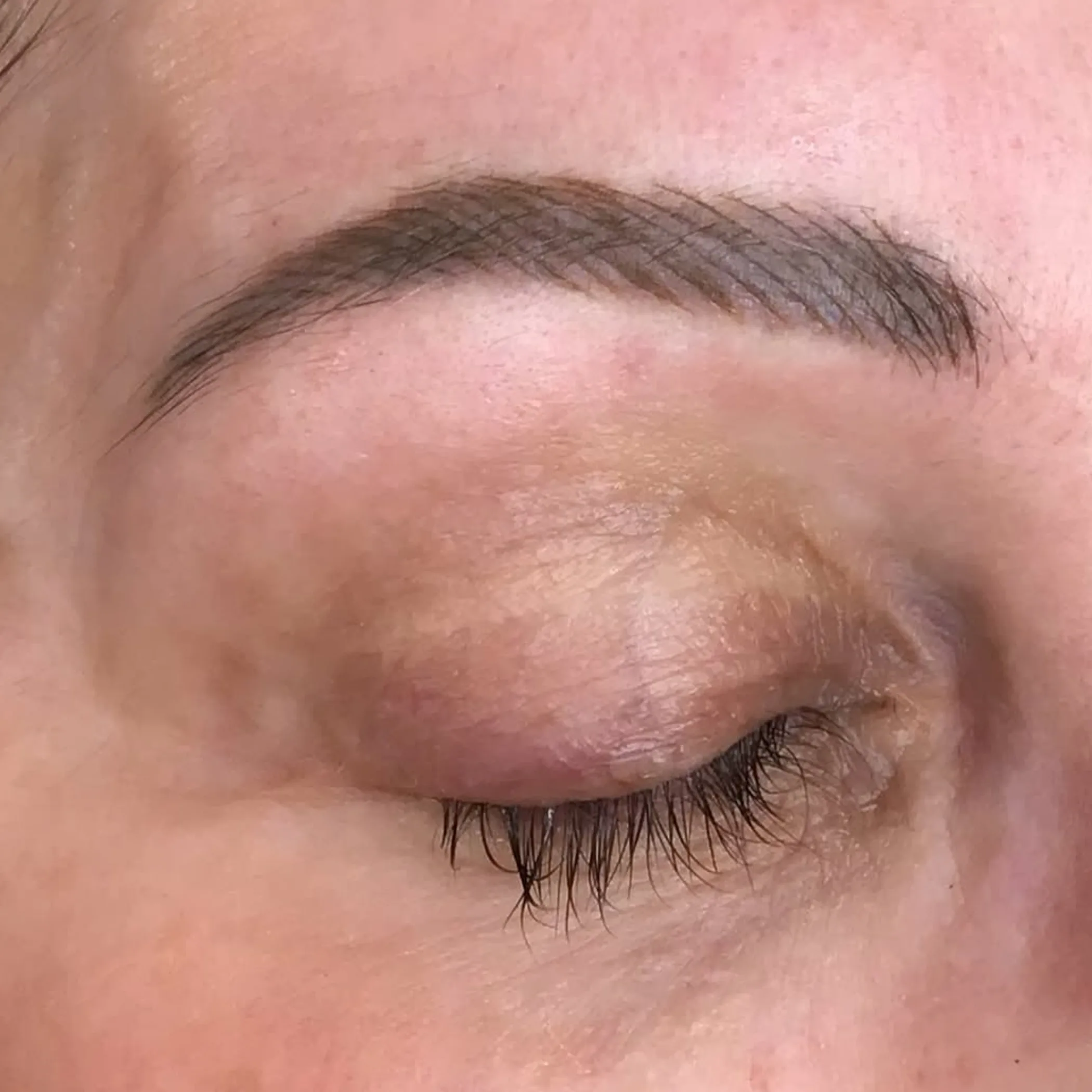
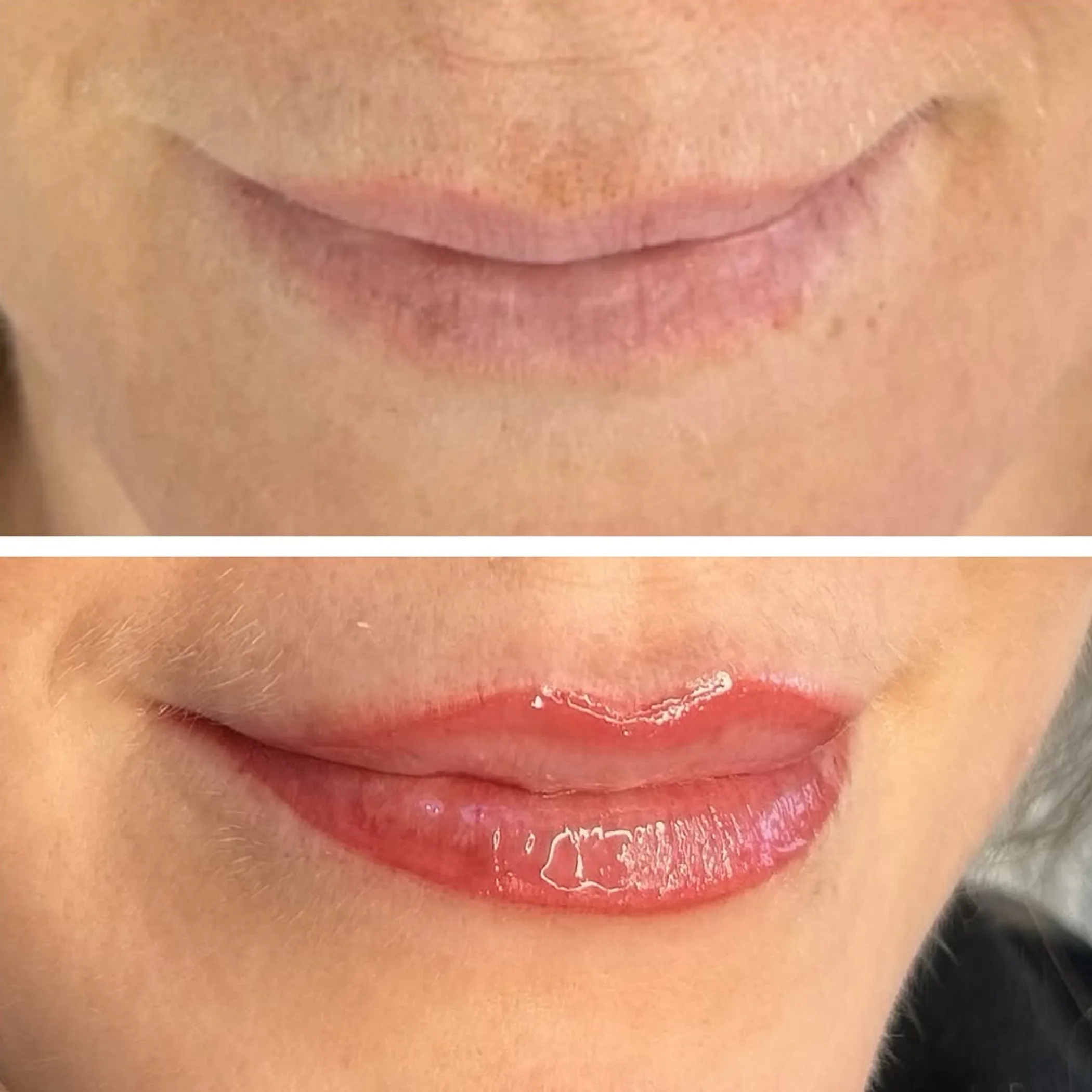
Microblading or machine work put in too deep on the eyebrows can leave a grey cast around the strokes. On the lips the vermilion edge may feather out and appear soft. With eyeliner the thinness of the skin in the vicinity of the eye means migration is all too apparent given the lack of margin for error.
Do not mistake every bit of softness in a healed piece for migration, some is to be expected. When the healing has run its course, true migration will be evident as something persistent and uneven.
The mechanics of it
You cannot treat the skin as a flat wall, it is vascular and layered and subject to fluid shifts. Implant some pigment and the body will have its say with inflammation and swelling which dictates where particles will come to rest.
It is a question of dermis or subcutaneous. The pigment ought to be in the right place in the dermis. Push it too deep and it will lose its definition.
Dermis or subcutaneous
Park your car in the bay and it is fine; put it half on the kerb and it goes sideways. In PMU, putting pigment in looser tissue that cannot be relied on to hold a precise shape is a recipe for migration.
Hence the emphasis on needle depth you will hear from Cosmetic Tattoo Melbourne, Killer Beauty, Quantum PMU or BuyPermanentMakeup. They will put it in different words but the training is consistent: go too shallow it will fade, too deep and it spreads.
Risks of technique and equipment
Here is where you will find the problems. A good pigment will be made to look bad by someone who is in a hurry or second guessing his depth and going over the same spot again and again.
PMU demands precision. A fraction of a millimetre is the difference between a pleasing outcome and a blur. No amount of ring light is going to make a rough technique seem sophisticated.
When it comes to needle depth
This is the plainest explanation for what causes pigment migration. A needle that is too deep allows lateral dispersal through softer tissue. Be inconsistent with your depth and you will have some parts heal well and others do not, giving migration a patchy appearance. With thin skin the risk is greater, there being less room for error. One will find the eyelids and certain areas of the lip border to be prime examples. Then there is oily skin which can present its own difficulties; it is not as though oil has a way of making pigment move on its own, but the texture and open pores do get in the way of putting it down with any consistency.
The Skin Overworked
When an area is subjected to too much repetition or pressure, or the technician makes too many passes, it is overwork. The trauma and ensuing fluid buildup and swelling will have an impact on how the pigment is retained. It also tempts the operator to go after a flawless line while the tissue grows less dependable with each pass.
I have put it to some creatives in the salon and cosmetic tattoo world and they will tell you the same thing: trouble usually starts when the operator thinks to “tidy up” a line. In that final act of tidying the skin will put its foot down.
Machine And Needle
A poor set of cartridges, a needle configuration that is not right, unstable hand speed or machine settings amiss are all culprits. If the setup is hard hitting it will put the pigment too deep; let it drag and it will tear at the tissue for an uneven deposition. Unpredictable hardware yields an unpredictable outcome, and low quality tools do nothing for one’s consistency.
Anatomy And The Skin
Clients do not always appreciate that skin is not uniform. Put two under the hands of the same technician for the same procedure and the healing can be worlds apart. Whether it is vascularity, age, scar tissue or the part of the body in question, these things dictate retention and spread. A consultation ought to be tailored accordingly, not something one could copy and paste.
Large Pores And Oily Skin
In the case of hairstrokes, oily skin will tend to give a softer result once healed. There is no certainty of migration but it does invite the dispersal of pigment if one does not alter technique, hence the talk of pigment migration eyebrows. For those with this type of skin it is better to be offered a method that is meant to heal softly than to be sold on razor-sharp strokes their skin cannot be trusted to keep.
Fragile Areas And Thin Skin
Thin skin does not forgive. On the eyelids or with mature skin and some lip tissue one can have bruising and swelling and an uneven take of the pigment, so depth has to be carefully controlled. This is no place for a beginner to be doing PMU even if it is not off limits. The reality is seldom what a client envisions from a fresh photo put out on the internet. Fresh work is not healed work and fragile skin has little time for the tidy narrative of social media.
Scar Tissue And Other Damage
Old scarring, laser work, inflammation or any number of chronic issues will change the way the pigment is received. Scar tissue might reject it in one spot and hold fast in another. With inflamed skin there is more swelling to obscure the proper depth.
| Factor | What It Changes | Migration Risk |
| Oily skin | More texture variation, less crispness | Moderate to high (fine strokes) |
| Thin skin | Safe depth is limited | High where delicate |
| Overworked skin | Interstitial fluid and swelling | High |
| Low-quality pigments | Instability in the particles | Moderate |
| Poor aftercare | Healing is disrupted by inflammation | Moderate |
Formula And Pigment
One should not think of pigment as simply colour from a bottle. The viscosity, the carrier solution, particle size and the stability of the formula determine the implantation and the healing. Use a product not fit for the job and you are asking for it. An ill-considered bargain can turn into an expensive fix when the tail of an eyebrow is left with a permanent grey fog.
Pigments Of Poor Quality
These may have ingredients that are not stable or a particle size that is anything but consistent, and they will not sit well in the tissue. While it is seldom the sole cause of migration in a tattoo or PMU, bad pigment will make matters worse. Training brands and suppliers are right to advocate in their materials for a formula that suits the method; a thick mix is not going to act like a thin one or a hybrid under the needle.
Viscosity
How the product flows and how dense the packing is will be dictated by the viscosity of the pigment. A runny formula is apt to spread in compromised tissue. Make it too thick and it will not implant without a fight, prompting more passes and the attendant trauma.
Pigment migration has its underhanded side in that the causes have a way of compounding. One is hard put to find a single dramatic error; more commonly it is a case of three or four minor ones in concert.
Trauma, Swelling And Healing
A procedure is but a controlled injury and the body will react accordingly. You can expect some fluid movement, swelling and inflammation, nothing out of the ordinary. An excess of it is another matter.
Heavily traumatised tissue may see the pigment shift as it heals. While interstitial fluid and swelling are not in themselves the source of migration, they do make for an environment that is less stable.
Fluid Buildup During Healing
There is no question that fluid can dilute, lift or reposition newly implanted pigment, in an overworked area of skin at least. This is true of microblading as much as machine PMU, if the pattern is different. The wound-healing papers on PubMed Central (PMC) would tell you that the cellular and fluid responses in tissue repair and inflammation are a complex business. It is not to say a swollen spot will inevitably migrate, but it does bear out the mechanism at work: a site that has been through trauma is not as predictable.
What Most People Get Wrong
Swelling has a habit of propping up the work so it appears bold and tidy in the first instance. Put down the swelling and the edges are what they are. Some will hold the healing process to account for a “ruined” result when in fact the placement was at fault. A same-day photo makes for good marketing but is a poor measure of technical quality; there is more to it than that.
Aftercare And Daily Habits
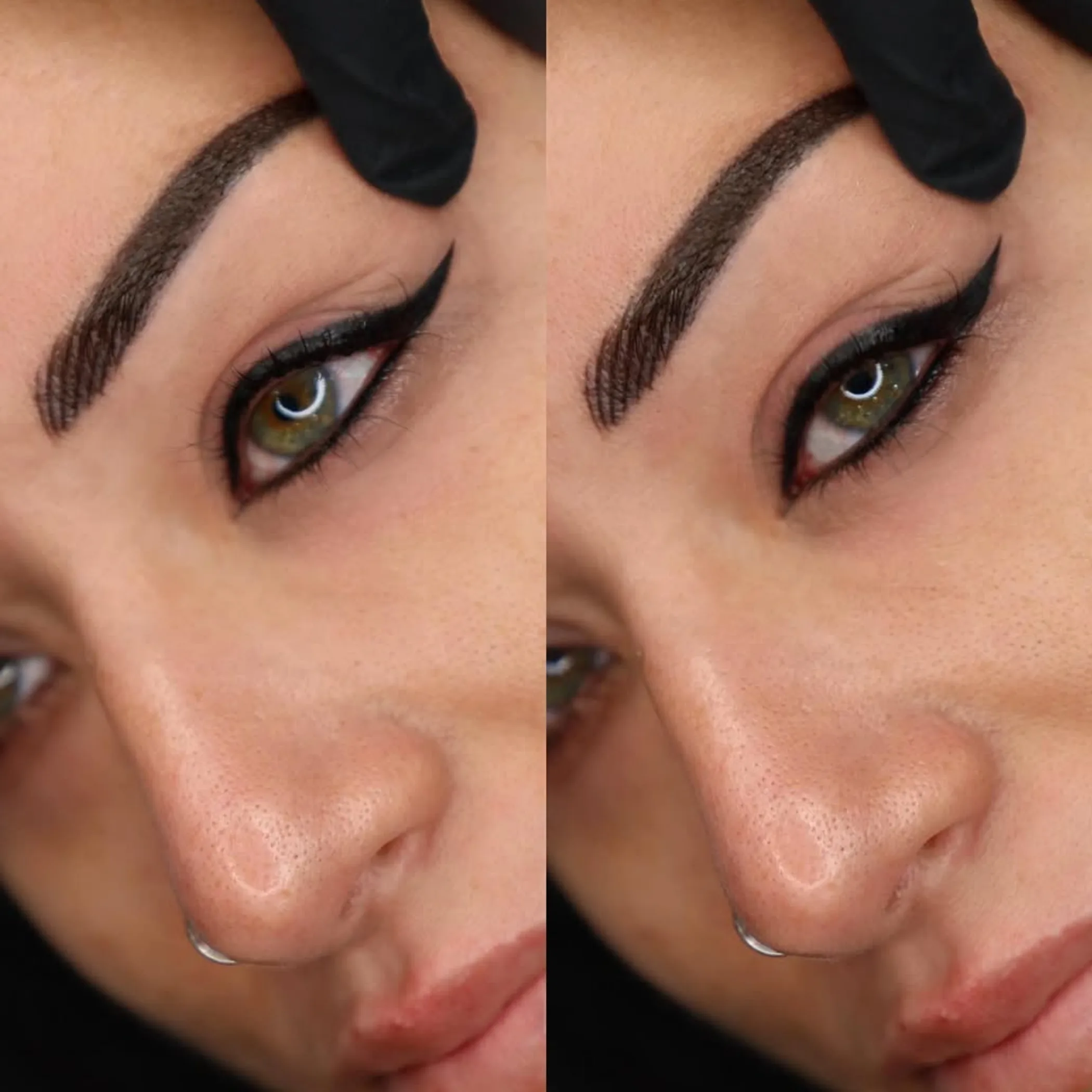
Poor implantation is not something aftercare will put right, yet it can turn a marginal result into a bad one. Friction, heat, sweat, harsh cleansing or picking will all stand in the way of a stable healing by keeping the inflammation going. Clients have control over this and should not be casual about fresh PMU if a laser-like finish is what is wanted.
Common Aftercare Mistakes
- Excess sweat and irritation from putting in too much exercise too soon.
- Disrupting the surface by way of picking at scabs and flakes.
- Introducing active skincare such as retinoids or acids in the vicinity before the time is right.
- Unprotected sun once re-epithelialisation has occurred.
- And then there is the matter of disregarding the technician because of something seen on social media.
Proper hygiene is still the order of the day, as per the public health authorities who in Australia set the official guidance on safe practice and infection prevention for tattoos. For information on skin penetration safety in Australia, see the NSW Health tattooing and skin penetration information.
How To Prevent Trouble
Ideally one does not need to fix anything. Sound technique, suitable products, planning and mutual realism are what keep pigment where it should be. Experience tells. A prudent operator will have a sense of when to alter his method or call it a day, and which client’s skin is not amenable to a certain kind of finish.
Best Practice For Technicians
- The method should be predicated on an assessment of the treatment history, scar tissue, pore size and the like.
- Pigments used ought to be of good repute and stable.
- Do not go chasing saturation with repeated trauma; keep needle depth in check and be conservative in high-risk or thin skinned areas.
- Make sure the client is clear on aftercare and can distinguish normal softening from actual migration.
Best Practice For Clients
Go with someone who can show healed work. Put them to the test on how they handle mature or oily skin, or old tattooing. If the reply is vague or has a whiff of the miraculous about it, move along.
Make the consultation your priority over any discount. In a proper one all will be discussed: risks, suitability, what to expect in the way of healing, even parking and access in a busy part of town and the cost of any correction. Initial PMU prices in an Australian metro can be all over the place but getting it done properly is cheaper in the long run than having to correct it.
Correction Options
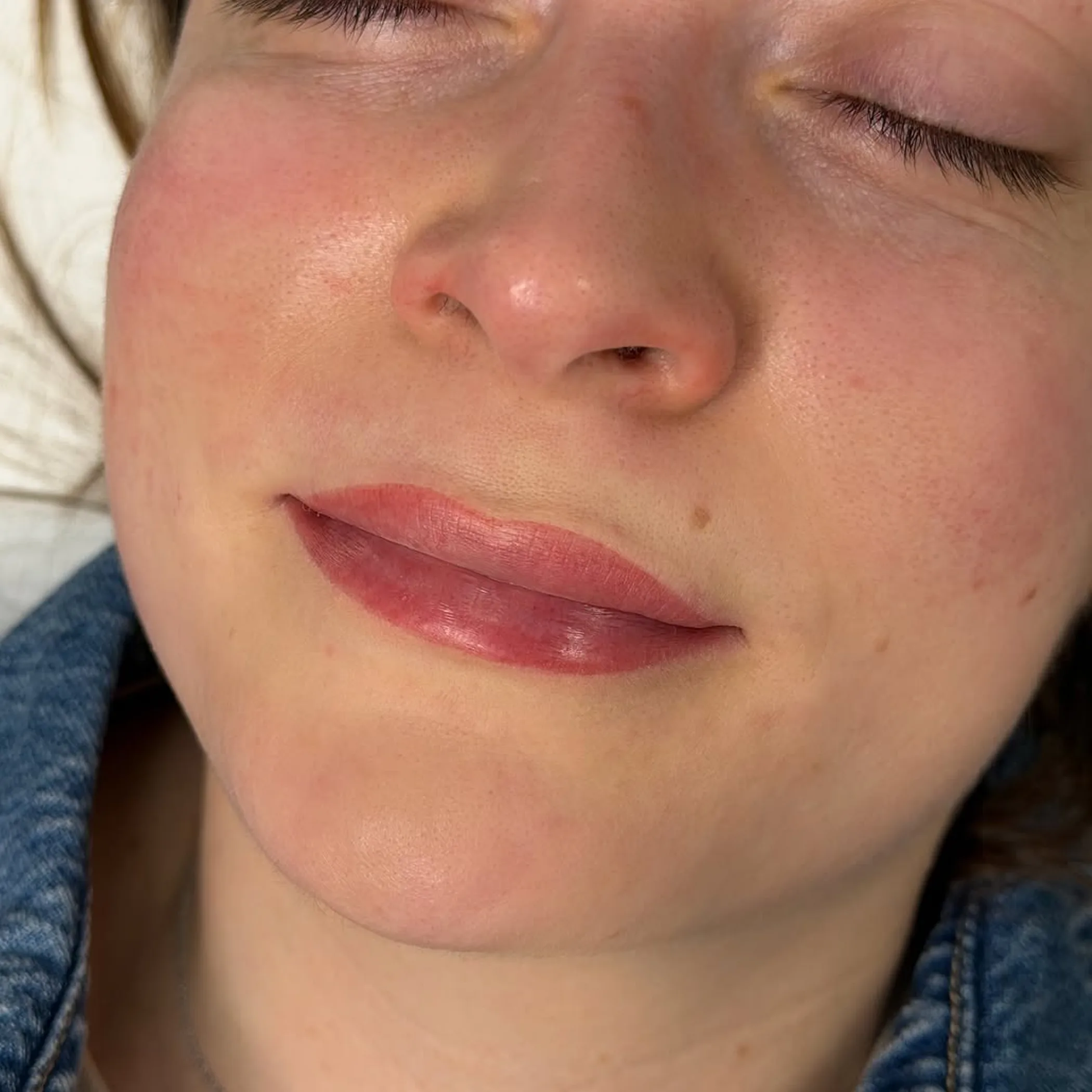
The approach to treating pigment that has migrated is a matter of assessing its severity, depth and colour as well as where it is and how long it has been in place. While one can put a cosmetic spin on some mild softening, actual migration will not be solved by wishful thinking.
In fact, this is an area where money is often squandered. Camouflage does not solve every problem; piling on more pigment to work that is already blurry will only make for a bigger mess.
To Wait, Review or Take It Out
A technician might counsel patience in the early stages so that any swelling has time to subside and stop distorting the appearance. When healing is done there are other avenues: a change in shape, removal with saline or laser, or in certain instances a judicious colour correction.
Any plan for dealing with migration should be conservative. The first order of business is to put a diagnosis on it. Is it a case of discolouration, scarring, a blowout or true migration? Lacking that you can have a messy return route in no time.
Eyes Require Particular Attention
Do not confuse cosmetic migration in the skin with pigment migration retina, which is a medical issue of a different and more serious order. Should you have visual symptoms and suspect the eye has been compromised by pigment or material, a medical assessment is called for without delay. The American Academy of Ophthalmology (AAO) makes the distinction between what they call pigment migration in retinal matters and a fuzzy brow tail.
Pain, redness, injury to the eye or changes in vision are not something for a salon to guess at or for home remedies. Leave that to the doctor.
Who we have in mind with this guide
We have written this for clients of PMU, microblading or cosmetic tattooing who would like to know if their healed result is to be expected, and for operators new to the trade seeking an unvarnished account of why things can go from crisp to cloudy.
Those looking for a magic bullet will find little use here as there is no such thing in this field. For the most part pigment migration can be handled, but nothing beats prevention.
In the end
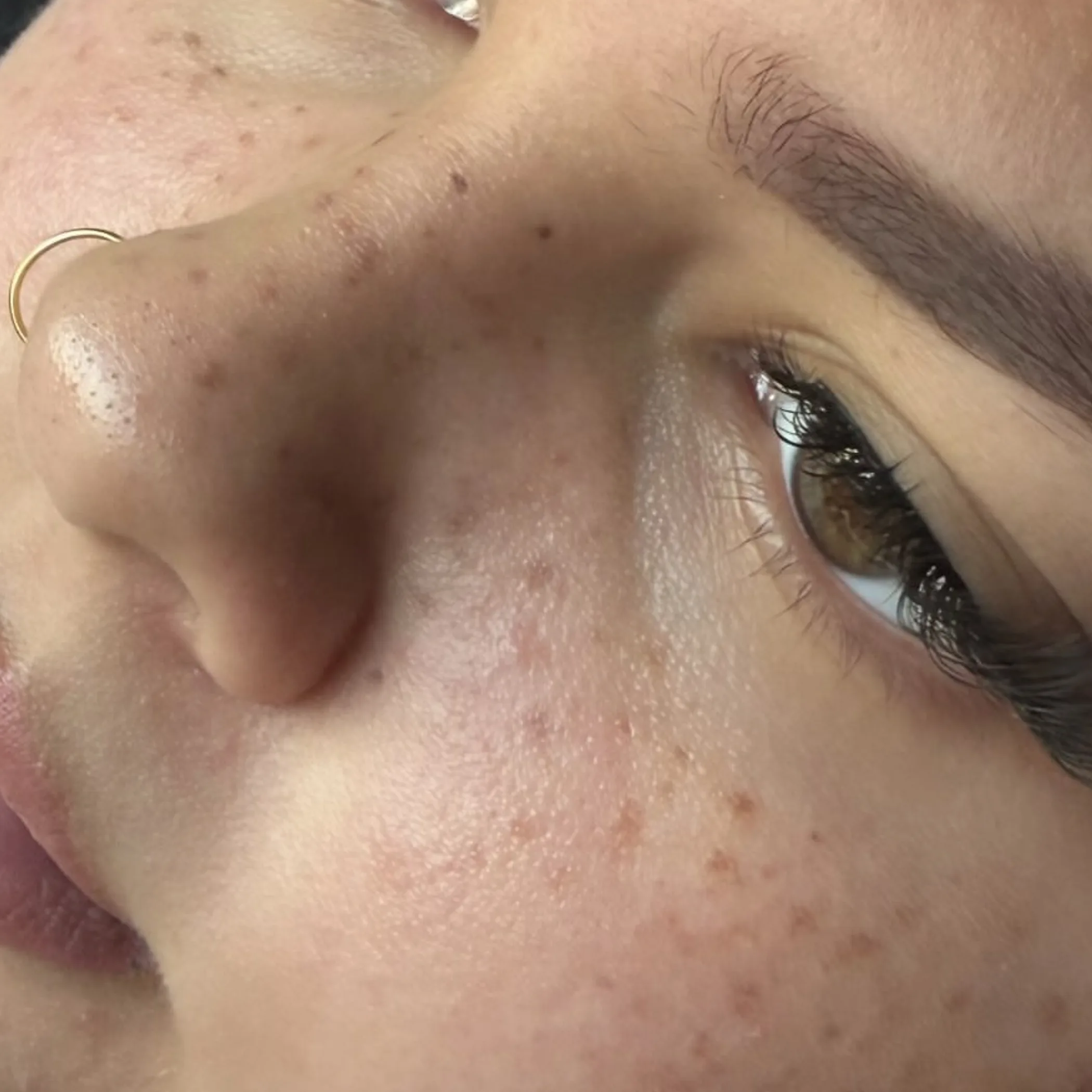
If one were to pinpoint the cause of pigment migration it is a confluence of product mismatch, tissue trauma, the wrong kind of skin and poor placement. Needle depth is the star of the show but then there is the matter of aftercare, swelling and the way the pigment behaves.
Rhys Richardson would be the first to tell you that skill is not the only ingredient in clean healed edges, restraint is too. You will find the better technicians are not necessarily the ones who do the most, but those with the sense to know when they have had enough.
FAQ
At What Age Does Pigmentation Start?
As a part of human development melanin is produced before birth. But whether through sun, hormones, genetics or inflammation, concerns over visible pigment can arise at any age. In the context of cosmetic tattoos it is the condition of the skin and its ability to heal that counts, not age.
How To Put Pigment Back In Your Skin?
You have to look at what caused the loss. With vitiligo, scarring or post-inflammatory issues a medical opinion is required. A cosmetic tattoo can address some of the appearance of it but will not put natural melanin back to work.
What Causes Pigmentation?
Melanocytes in the skin produce melanin and that is the source of natural pigmentation. Sun, injury or hormones can make it uneven. That is a world apart from the colour put in mechanically with a PMU or tattoo.
Which Organ Is Responsible?
Practically speaking the skin is the answer, since the melanocytes in the epidermal system are what give the body its colour. There is pigment in the eyes and hair but that is not usually what is meant.
Is Complete Fix Of Migration Possible?
Not in all cases. One can see visual improvement with the milder sort of migration but anything more pronounced may take several sessions of saline or laser to put right. Location and tissue healing will have their say in the outcome.
